Cleaning Radish Seed
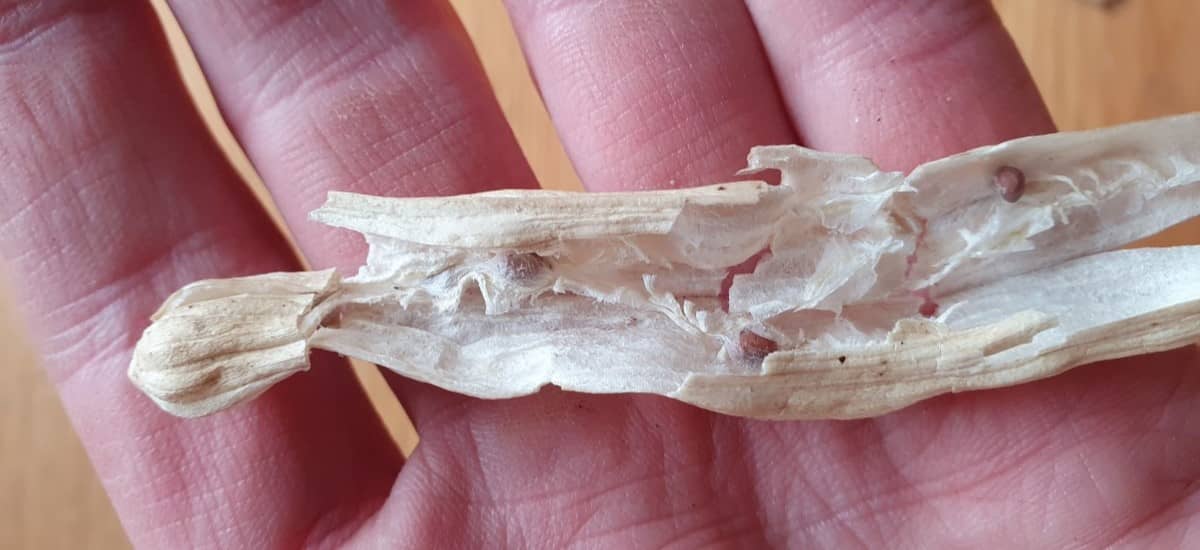
Radish (Raphanus sativus) seed is one of the more fiddly seed to get clean. This is because the seed tends to get bound up in the fibrous innards of the pods. Threshing is the tricky bit. It’s fine to do small amounts by hand just rubbing out the seed but the doesn’t cut it for larger quantities. I tried to find a more efficient way for this year’s rat-tail radish seed by making a drill powered bucket thresher copied from somewhere online.
Find yourself a big bucket (people who work in kitchens have been known to procure them for a nominal bribe). Get yourself to a hardware shop with a tenner. Get something nice for yourself on the way back with the change. I stuck a piece of plywood in the bottom to protect the bucket a bit as well.
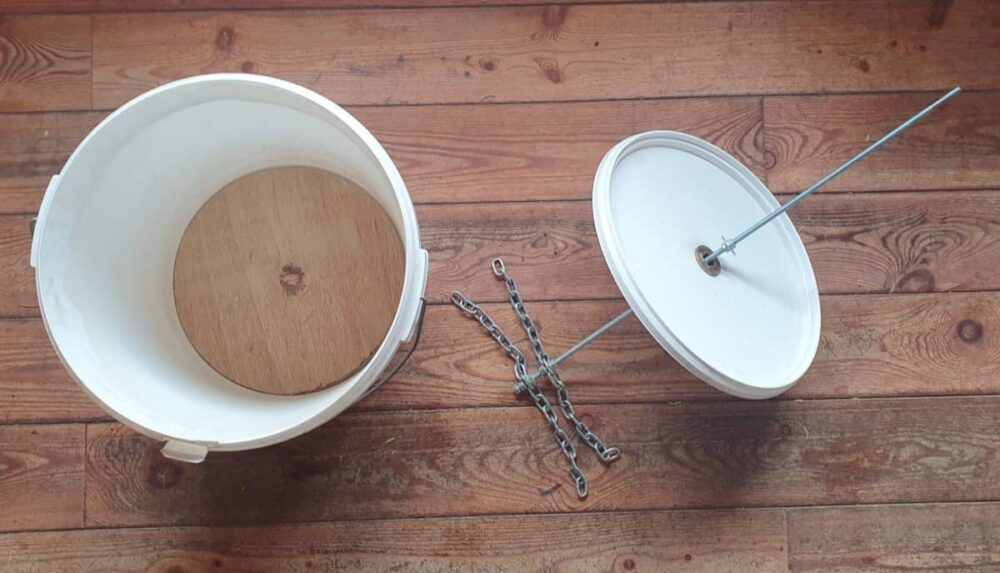
Chains & StuffA few handfuls at a time worked best and about 30 seconds of the drill…rattle rattle rattle. After the rough and tumble I would say the vast majority of the seed had been freed and the pods were broken into fine enough pieces to allow them be winnowed away. A mask is definitely recommended as a lot of fine dust will be waiting for you when the lid comes off. I sieved out the bulky stuff to leave only the seed and the small bits of straw. This leaves you much less stuff to winnow and will be much quicker than winnowing everything.
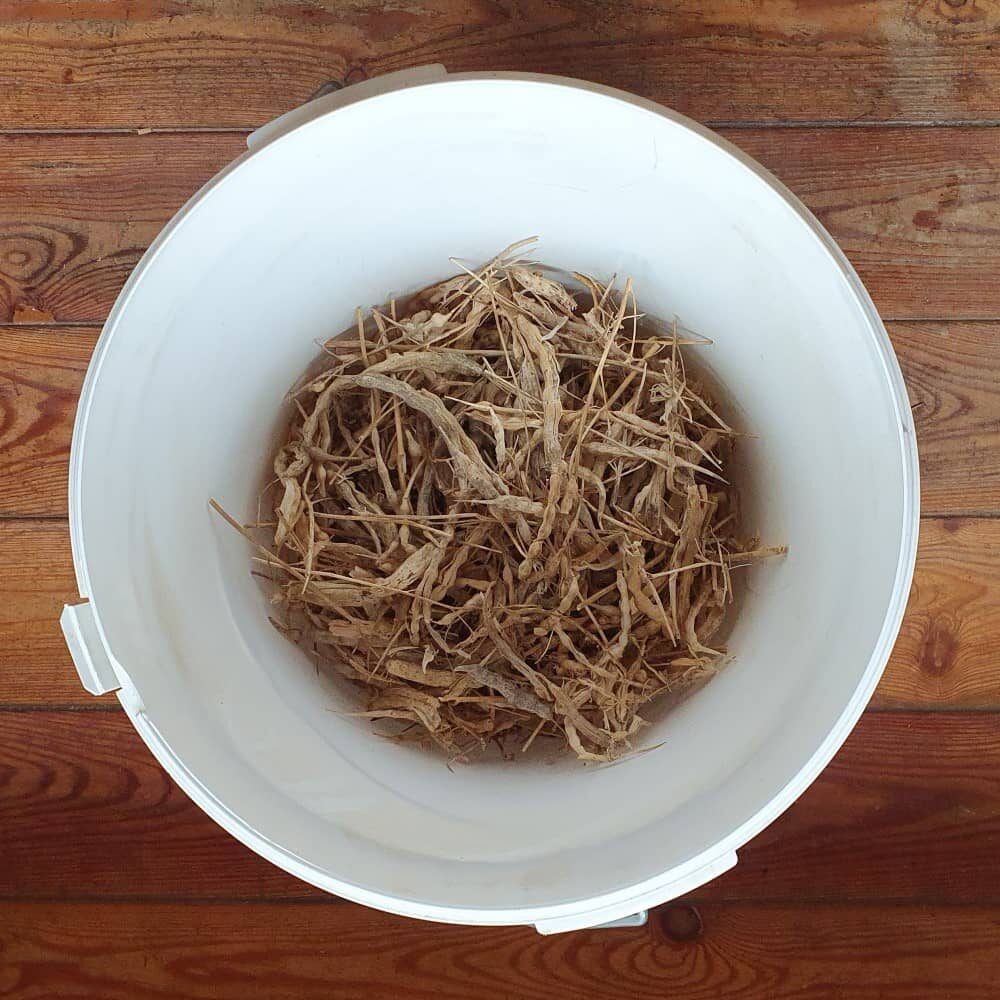
Before


Two passes through the winnowing machine (also copied online from the plans provided by Real Seeds company) and the seed was clean. I had to pick out a few broken seeds. Radish seed is, I think, the biggest of the Brassica seeds and for this reason also easier to damage when threshing. I suspect these broken seeds were a result of the rough threshing but not 100% sure.

All in all, it worked quite well. The ‘thresher’ is quite easy to make and for negligible cost. I will probably have more use for it cleaning peas and beans as well.