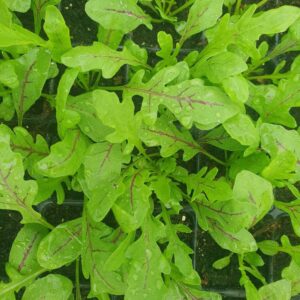
Buck’s-horn plantain (Plantago coronopus), also known as stag’s horn plantain or minutina, is a perennial originally from the Mediterranean but often found growing around the coast of Ireland. It is a native Irish plant. The leaves are deeply serrated, very decorative and taste great. They have a succulent and fresh crunch and have become popular with salad producers lately.
Seeds are tiny and should be thinly sown on compost or bare soil without burying. It is probably best to transplant this one. Plants can be slow to get going but when established are vigorous and very cold hardy. The outer leaves of the rosette can be harvested repeatedly throughout the year.
Average 400 seeds per packet (0.2g)
Seed was collected from the Dingle Peninsula (which I have ceded to Cork).
A red veined variant of perennial, or ‘wild’, rocket (Diplotaxis tenuifolia). The lobed leaves have a deep crimson veining and are fuller than regular wild rocket but it is grown the same way.
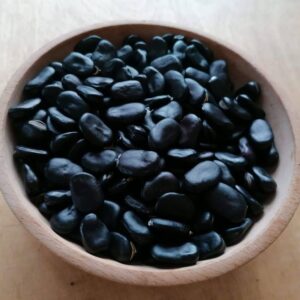
Sourced from the Irish Seed Savers. An ancient variety grown in Russia since time out of mind. They are very hardy and I have saved seed from them in very wet and windy summers whereas other varieties I tried succumbed to chocolate spot. Plants are a bit over a meter high so need supporting. The mature beans are a deep dark purple almost black. I grow them for the dry beans and have used in stews, ful madames and such.
Sow directly in the soil from late February until the end of April. Early sowings are less vulnerable to black bean aphid (blackfly) damage as the plants are well established before they strike.
Perennial, or ‘wild’, rocket (Diplotaxis tenuifolia) is very popular now and increasingly likely to appear in your salad. For good reason – the flavour is nice and sharp and doesn’t get bitter, even in the older leaves. The leaves are more slender and deeply serrated than annual rocket, and don’t go limp soon after picking. Makes good pesto and in the second year is conveniently ready to harvest at the same time as wild garlic. Can harvest as cut and come again… and again the following year.
Sow enough plants so you will be able to pick sparingly and regularly from each one without weakening individual plants. Seeds are quite small. I plant around 4 seeds per module in a tray and then plant outside in their final home a few weeks later. The long summer days will trigger flowering. You can pick off the flowering stems to encourage more leafy growth or let them flower and collect the seed in Autumn.
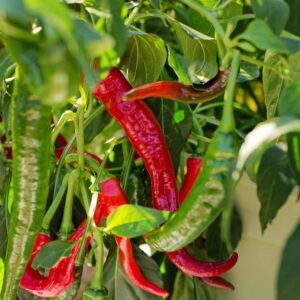
A well known variety, cayenne chillies can be used fresh or dried and crushed into a powder. Plants grow to about 60cm tall and are unfussy. They produce an abundance of fruits. Take care when sowing as the capsaicinoid chemicals which give chillies their heat is abundant on the seeds.
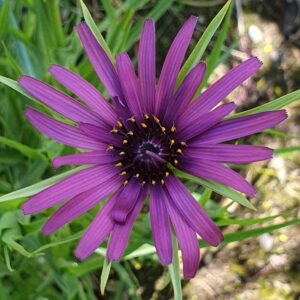
Salsify (Tragopogon porrifolius) is an uncommon but easy to grow root crop. Direct sow in Spring for harvest in the winter. The roots are long, slender and have been described as oyster flavoured. Roots can be replanted, or left in situ, and will flower and set seed in the second year. Flowers are ornamental and edible. Young leaves can be eaten raw or cooked like spinach and even the young shoots can be eaten like asparagus.
Salsify is an ancient food crop from south east Europe and North Africa which is referenced often in plant books throughout antiquity. Though it is largely out of favour now and not widely grown. It is part of the Asteraceae family, like lettuce and sunflowers, so what we consider the ‘flower head’ is actually a basket shaped head containing many individual (sessile) flowers. Each of these flowers will produce a seed when fertilised. Seeds are long and rod shaped with ribs. They have feathery hairs, known as a pappus, to aid with wind dispersal, as do many seeds in this family.
Sow in well prepared deep loose soil so that roots can stretch their legs. Sow seeds in shallow drills 1cm deep with 30cm between rows. Germination can be erratic – some seeds will germinate in a few days with most taking 2 to 3 weeks. Once they are on the way, thin plants to around 8- 10cm apart. After that, they need very little attention.
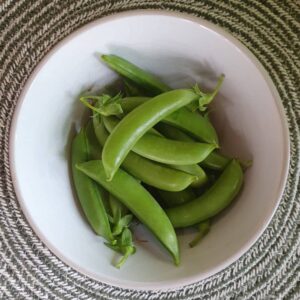
This was the favourite pea from my little 2024 sugar snap trial. It had been saved by a friend of mine for a number of years who got it from the Seed Co Op in the UK. It is very vigorous and crops over a long period. Peas are deep green, very sweet, totally stringless and have great flavour. The fact that it was listed under the name ‘Sugar Snap’ implies that this variety has a lineage back to the first sugar snap variety which was created and released in 1979 by plant breeder Calvin Lamborn.
Purple Sprouting Broccoli provides an early season treat when not much else is available in the garden. This is a late maturing selection which can be harvested March – May. Because it is an overwintered crop beginner gardeners often assume it is to be sown late in the season. However it should be sown in spring/early summer so that the plants are already well established going into winter.
Average 100 seeds per packet
Sow: May to June Harvest: March-May Spacing: 60-80cm between plants
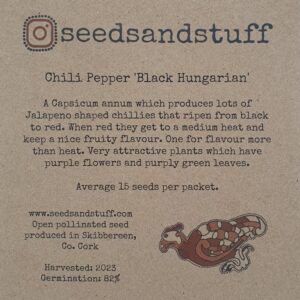
‘Hungarian Black’ chilli peppers (Capsicum annum) produce smallish bushy plants (50cm) which produce lots of Jalapeno shaped fruit. They ripen from black to red. When red they get to a medium heat and keep a nice fruity flavour. One for flavour more than heat, and a good size for when you want to use a whole chilli on a dish for visual effect without taking the face off anyone. Very attractive plants which have purple flowers and purply green leaves.
Average 15 seeds per packet.
Annoyingly, I forgot to take pictures of these but you can see how fancy they can be at the always visually stunning Baker Creek Seed Company catalogue.
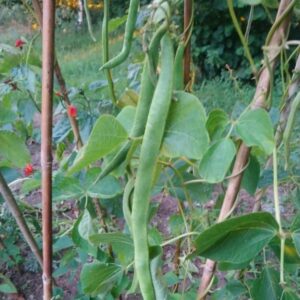
A nice relatively stringless scarlet flowered runner bean. This variety is slow enough to produce seed so the pods can be left on the plant longer before getting too tough to be edible.
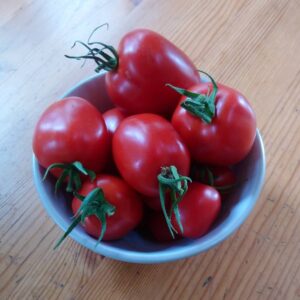
A vigorous paste tomato bred in Germany for late blight resistance. Being indeterminate, I found this far more productive than traditional ‘Roma’ type tomatoes which tend to be determinate types used in field cultivation. These plants keep growing and produce late into the season. The oblong chunky fruits are quite dry and thicken sauces and salsas nicely.
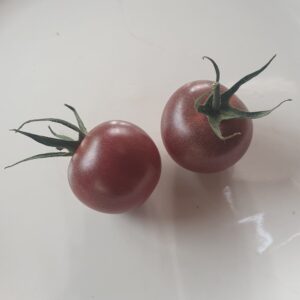
‘Black Cherry’ produce clusters of 25mm (1”) rich tasting tomatoes. They have black-mahogany skins which cover dark red sweet flesh. Vigorous indeterminate type which keeps going late into the season. Productive in open ground but it would be possible to grow it in a container and keep manners on it by pruning.
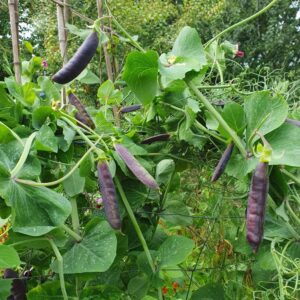
Sourced from Bakers Creek in the US, apparently the first ever purple podded sugar snap pea. Bred by Alan Kapuler. Very tall growing more than 2m so needs high trellesing. The plants are very tendrilly and pretty, ornamental in their own right. They produce pods over a long period. The smaller pods are best for eating raw whilst the older ones are great cooked al dente. They keep their colour with cooking unlike purple french beans.
‘Lenka’ (Daucus carota) is a medium early variety that is grown for fresh eating or for short term storing. It produces sweet flavoured, cylindrical bright orange roots. Can be succession sown. For fresh eating, sow from April outside and for use as a maincrop or storing carrot sow in June. Carrots should be sown directly in rows ~30cm apart. After a few weeks, thin out seedlings until about 5cm apart.
An heirloom cucumber (Cucumis sativus) from the US, also known as ‘A & C Pickling’ – presumably after the company who introduced it in 1928 , Abbot & Cobb of Philadelphia. A prolific producer of mostly straight fruits with dark green skins that hold their colour. Though a good choice for pickling, they are perfect for fresh use in salads, especially when picked a bit smaller.
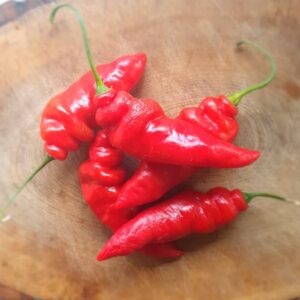
‘Aji Largo’ is a Capsicum pubescens chili that originates from Ecuador. Fruits have fleshy walls, ripen to a deep red, and have a nice hot punch (30,000-100,000 on the Scoville scale). The latin name refers to the hairy leaves of this pepper and, along with the black seeds, is what marks them out from the other Capsicum species. This type of chili are also often referred to as ‘Bolivian Hairy’ or ‘Rocoto’ chilies.
Plants have a relatively open growth habit and have a reach of up to a meter. The fruits are about 70mm in length and conical with deep wrinkles. It can be used like any chili – fresh, made into a paste or dried. The flesh is thicker than other chilies and has a higher moisture content.
As Capsicum pubescens grows at higher elevations than other species it is relatively cold tolerant and hardier than other chilis. It still won’t survive frost but it is possible to overwinter them in Ireland if they are brought in and protected for the winter months.
Start seeds as early as possible with supplementary heat and light if necessary. The plants should have as much vegetative growth as possible before flowering and producing chilis. They can be grown in pots but large pots are needed to allow the plants to reach their full potential.