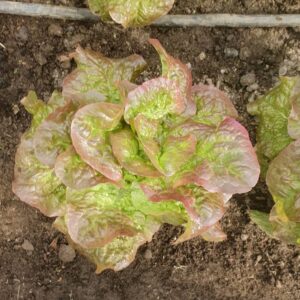
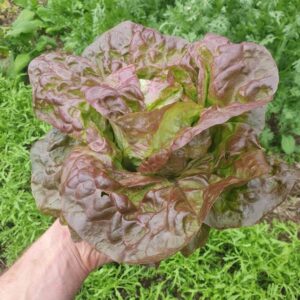
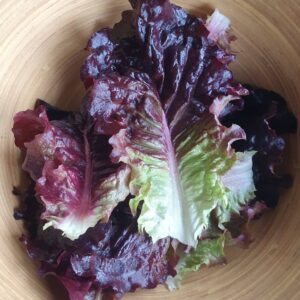
‘Rosemarry’ is a butterhead lettuce (Lactuca sativa) which produces large heads with blistered burgundy tinged soft green leaves. Can be grown outside in Ireland from a September sowing. A relatively quick growing variety good for early crops and successional sowing.
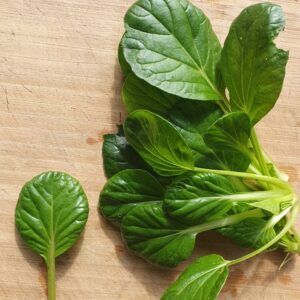
Tatsoi (Brassica rapa) is a fast growing cold tolerant leaf which is great for salads and stir fries. It can bolt in longer days if drought stressed. Ready to harvest in 6 weeks.
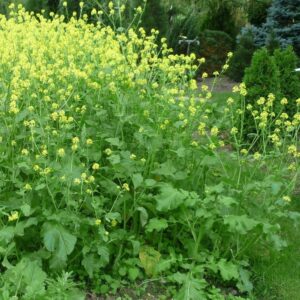
White mustard seed (Sinapis alba), also called yellow mustard, is used to make the common table mustard condiment. The leaves are also used for salad and the plant’s rapid establishment has led to it being widely used as a green manure.
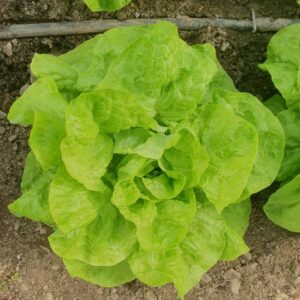
‘Valdor’ is a well proven winter hardy butterhead lettuce (Lactuca sativa). It produces medium sized heads with the soft green leaves and great taste typical of butterheads. Can be grown outside in Ireland from a September sowing. Will produce even better in a polytunnel or under a cloche.
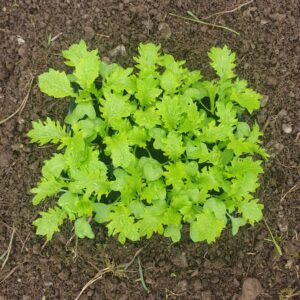
‘Purple Frills’ is a mustard (Brassica juncea) variety with very fine deeply serrated leaves. As such it is an attractive addition to salads whilst also giving a little spicy kick. Mature leaves can be stir fried or blanched as a spinach alternative.
It’s very winter hardy and if sown in Autumn can go until the frosts, or all year under cover. In summer sow little and often and don’t forget to eat the yellow flowers when the plants bolt. Mustards produce abundant seed so it is a good candidate for anyone who wants to grow their own microgreen seed.
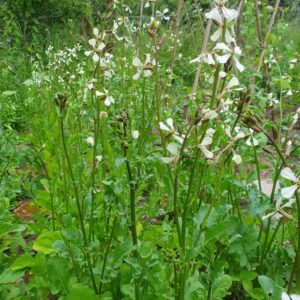
Annual Rocket (Eruca sativa) is a spicy salad leaf which is very easy to grow. Added to salads and sandwiches for a peppery kick and often lashed onto pizzas for some reason. It is best to sow larger amounts early or late in the season as the long days of summer cause it to bolt very quickly. The flowers make a nice edible garnish though and provide food for pollinators so how bad. During the summer it could be planted little and often. Very cold hardy.
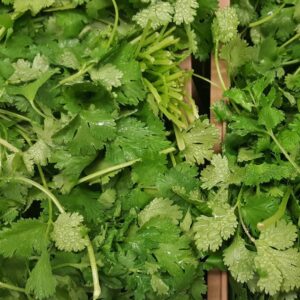
Coriander (Coriandrum sativum) is an annual herb that produces tangy leaves and aromatic seeds. The word ‘cilantro’ is usually used to refer to the leaves of the plant which are used fresh or dried whilst ‘coriander’ usually refers to the seeds of the plant which are ground up as a spice. C. sativum is indigenous to the Mediterranean and Middle East regions. It has been cultivated further afield for millennia.
Plants grow to 60cm tall and have alternate feathery leaves emanating from a central main stem.
‘Marvel of Four Seasons’ is a heritage red and green butterhead lettuce (Lactuca sativa). Leaves are crinkled and tender and form a loose head around a small heart. The head can be harvested all at once or leaves can be taken from the outside over multiple harvests.
Lettuce is best grown as transplants. Can be started off in modular trays from as early as January if you have a heated propagator (be careful to not let lettuce seed get above 23°C as the seed can go dormant then and not germinate). Sow seeds very shallowly or just sit on top of the compost and water gently. From spring no additional heat should be required. Butterhead lettuces are ideal for winter sowing and can be seeded until the end of September.
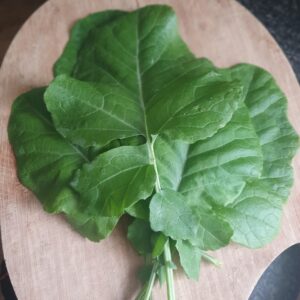
Originating from North Africa, Texsel greens (Brassica carinata) came about as a hybrid between black mustard (B. nigra) and B. oleracea. It is known by various other names such as Ethiopian mustard or garlic kale. An annual crop grown as a salad or cooking green – more delicate in flavour than other Brassica greens. Can be picked multiple times and the flowering stems cooked when it does start bolting. Successional sow for a steady supply.
Can also be grown as a green manure or cover crops as a similar way to mustard.
Average 200 seeds per packet.
10g is approximately 2,000 seeds.
Select options
This product has multiple variants. The options may be chosen on the product page
Buck’s-horn plantain (Plantago coronopus), also known as stag’s horn plantain or minutina, is a perennial originally from the Mediterranean but often found growing around the coast of Ireland. It is a native Irish plant. The leaves are deeply serrated, very decorative and taste great. They have a succulent and fresh crunch and have become popular with salad producers lately.
Seeds are tiny and should be thinly sown on compost or bare soil without burying. It is probably best to transplant this one. Plants can be slow to get going but when established are vigorous and very cold hardy. The outer leaves of the rosette can be harvested repeatedly throughout the year.
Average 400 seeds per packet (0.2g)
Seed was collected from the Dingle Peninsula (which I have ceded to Cork).
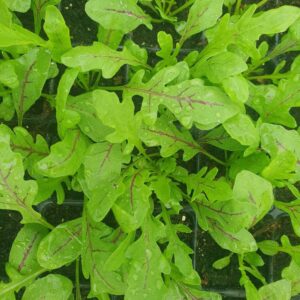
A red veined variant of perennial, or ‘wild’, rocket (Diplotaxis tenuifolia). The lobed leaves have a deep crimson veining and are fuller than regular wild rocket but it is grown the same way.
Perennial, or ‘wild’, rocket (Diplotaxis tenuifolia) is very popular now and increasingly likely to appear in your salad. For good reason – the flavour is nice and sharp and doesn’t get bitter, even in the older leaves. The leaves are more slender and deeply serrated than annual rocket, and don’t go limp soon after picking. Makes good pesto and in the second year is conveniently ready to harvest at the same time as wild garlic. Can harvest as cut and come again… and again the following year.
Sow enough plants so you will be able to pick sparingly and regularly from each one without weakening individual plants. Seeds are quite small. I plant around 4 seeds per module in a tray and then plant outside in their final home a few weeks later. The long summer days will trigger flowering. You can pick off the flowering stems to encourage more leafy growth or let them flower and collect the seed in Autumn.
Sea plantain (Plantago maritima) is the seaside cousin of ribwort plantain and a much nicer nibble. Though a coastal plant, it can be occasionally found inland at lake shores and mountains. It should grow fine in any free draining soil as its close relative staghorn plantain (P. coronopus), also a coastal plant, is cultivated by salad growers in many areas.
A native plant to Ireland, sea plantain typically flowers from June to September in the wild. When seed heads are ripe they can be cut and hung to dry upside down in a paper bag. Enough seed will fall out for you to replant again. Seed is tiny so difficult to separate from the chaff if you break up the dried flower heads.
‘Apache’ is a very attractive lettuce (Lactuca sativa) with deep red crinkled leaves. It grows in a loose rosette and can be harvested as a cut and come again salad or by the whole head. It is suitable for growing all through the season.
Lettuce is best grown as transplants. Can be started off in modular trays from as early as January if you have a heated propagator (be careful to not let lettuce seed get above 23°C as the seed can go dormant then and not germinate). Sow seeds very shallowly or just sit on top of the compost and water gently. From spring no additional heat should be required.
‘Wasabino’ is a variety of mustard (Brassica juncea) which has a gentle horseradish/wasabi flavour along with the usual spicy kick. Young leaves are light green, with serrated and wavy edges and are ideal baby leaf salad. Older leaves are tougher and better for stir frying. Very cold hardy so if you have a polytunnel you could grow it all year round.
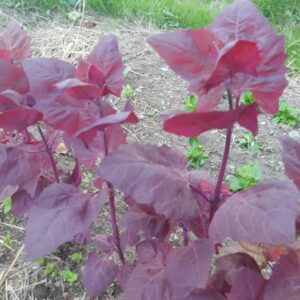
Red Orache is a very attractive and easy to grow plant which can be used like spinach. When young you can eat the plant whole. If you let it grow on it will reach a height of more than 1m and then only eat the leaves as the stem will be fibrous. It will not bolt like spinach.
Seeming like an exotic thing to me, I was surprised to see how well it coped with the dismal summer of 2023.
However, maybe I shouldn’t have been surprised as it is a member of the Amaranthaceae, or goosefoot, family and looks a bit like a large red coloured fat-hen.