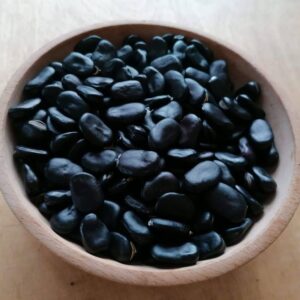
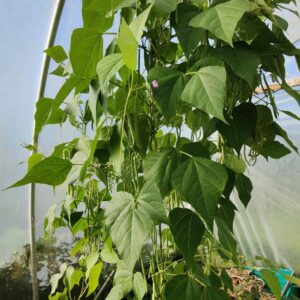
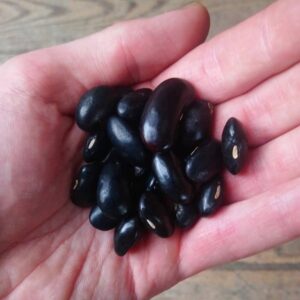
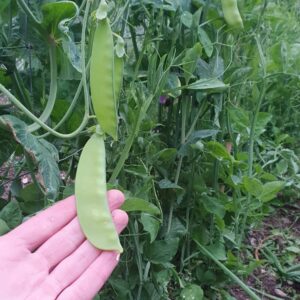
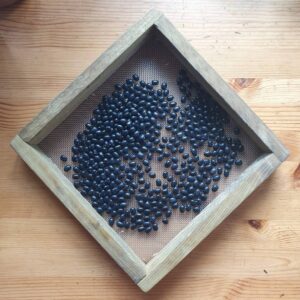
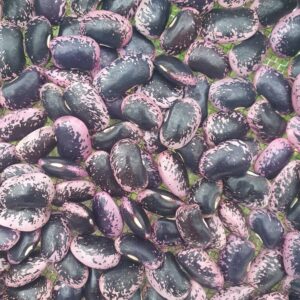
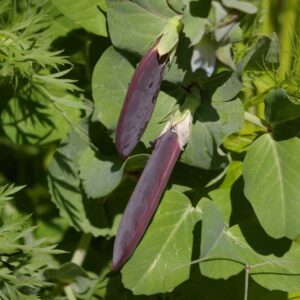
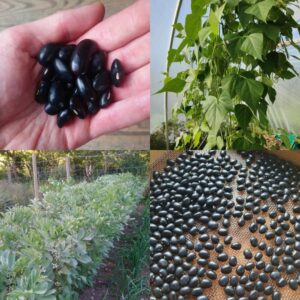
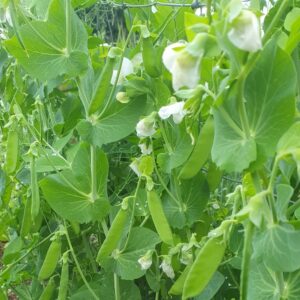
Sourced from the Irish Seed Savers. An ancient variety grown in Russia since time out of mind. They are very hardy and I have saved seed from them in very wet and windy summers whereas other varieties I tried succumbed to chocolate spot. Plants are a bit over a meter high so need supporting. The mature beans are a deep dark purple almost black. I grow them for the dry beans and have used in stews, ful madames and such.
Sow directly in the soil from late February until the end of April. Early sowings are less vulnerable to black bean aphid (blackfly) damage as the plants are well established before they strike.
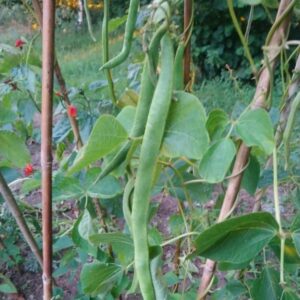
‘Cobra’ is an extremely reliable climbing French bean (Phaseolus vulgaris) well known in Ireland. Found often in kitchen and market gardens here due to its consistent heavy crops. It produces well both inside an outside, even producing a great crop and ripening seed outside in the dismal 2024 summer. The beans are stringless, long (up to 20cm) and round.
Climbing French beans are a very productive use of space. They can be grown up a trellis net, string lines or bamboo canes and will climb to around 170cm. Don’t worry when you have a glut. They are easy to blanch and freeze or if you don’t get around to that you can let the beans dry and use them like any dry beans. Cobra is a black seeded variety.
They can be sown directly in the soil when risk of frost has passed. I plant them in May outside as I don’t see any advantage to pushing them too early as they will develop very slowly until the soil warms up anyways. You can make another sowing a few weeks later to extend the cropping period.
Sourced from Irish Seed Savers, this is a selection from ‘Scarlet’ so has the attractive clusters of red flowers. The dried beans are a deep shiny black colour and great for stews etc. Grows vigorously.
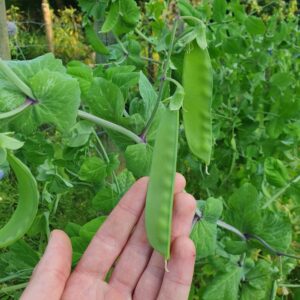
‘Green Beauty’ is a tall (2m) purple flowered pea which produces tender flat pods ideal for steaming and stir frying. They get very large when not picked but remain tender even at full size.
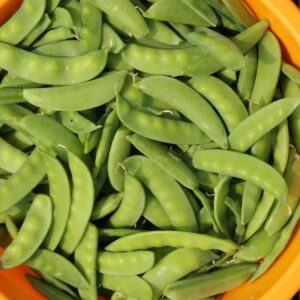
The french term ‘mangetout’ means ‘eat all’ and refers to peas in which the whole pod is eaten with the small undeveloped peas inside. They are also refered to as snow peas.
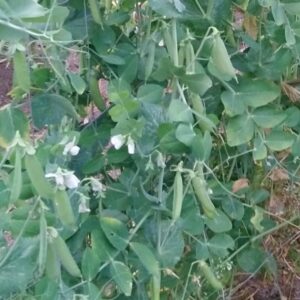
A very early and productive pea. Being a round seeded type, First Early May is frost hardy and suitable for autumn sowing to get the earliest crops. Grows to about 140cm so needs support like most garden peas.
Madeline gave me some of this seed from her stash. I found it just as she describes – good sized beans (Phaseolus vulgaris) which mature early and are good for drying. They were unaffected by the regular rain during their last few weeks of ripening. Can be eaten as a green bean. Noted as a French heirloom variety.
‘Ambrosia’ produces a good yield of medium sized pods early in the season. Not the tallest pea but still needs some support. They are great for eating raw or cooking al dente. Pick regularly to encourage more flowering and more pods.
‘Ternillos’ is a local landrace from Salamanca which was collected as part of a project that saved local varieties for conservation. It was given to me by Maria, a seed saver from the area. It grows 1.5m and needs supporting. The peas can be harvested for their seeds as a dry pea, but the young, sweet pods are traditionally eaten whole, before the peas fully develop. Ideal for steaming and stir frying.
A heritage German runner bean that I sourced from Irish Seed Savers. Produced lots of short runner beans which ripened really well into dry beans outside. I speculate that the shorter podded varieties might be best for producing dry beans as the pods seem to ripen and dry more quickly.
This was the favourite pea from my little 2024 sugar snap trial. It had been saved by a friend of mine for a number of years who got it from the Seed Co Op in the UK. It is very vigorous and crops over a long period. Peas are deep green, very sweet, totally stringless and have great flavour. The fact that it was listed under the name ‘Sugar Snap’ implies that this variety has a lineage back to the first sugar snap variety which was created and released in 1979 by plant breeder Calvin Lamborn.
A nice relatively stringless scarlet flowered runner bean. This variety is slow enough to produce seed so the pods can be left on the plant longer before getting too tough to be edible.
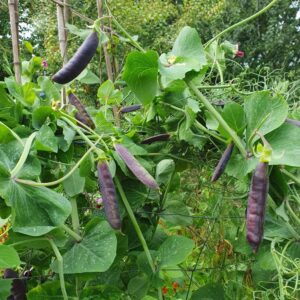
Sourced from Bakers Creek in the US, apparently the first ever purple podded sugar snap pea. Bred by Alan Kapuler. Very tall growing more than 2m so needs high trellesing. The plants are very tendrilly and pretty, ornamental in their own right. They produce pods over a long period. The smaller pods are best for eating raw whilst the older ones are great cooked al dente. They keep their colour with cooking unlike purple french beans.
Capucijner is an heirloom purple podded pea. Young peas can be eaten raw but the variety is typically used for its dried peas which were a staple food in Holland some time ago. They’re an excellent addition to soups and stews. A tall vigorous pea which needs supporting.
‘Hetman’ is a great tasting stringless sugar snap pea. Crops early and heavily but within a short window, so I would succession sow this one to spread out the harvest. Reaches a height of 100cm so needs trellising.
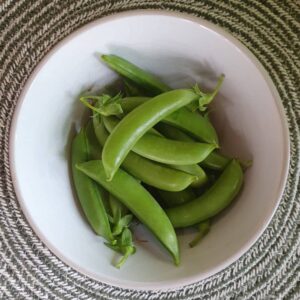
Sugarsnap peas have edible pods that lack the fibrous ‘parchment’ layer which is present in the inner walls of the pods of other peas. They are great for eating raw or cooking al dente.
This red haricot bean came from Hodmedod’s in the UK. It is a variety which was bred by the late Colin Leakey who was a prolific plant scientist and breeder. He had a lot of expertise with Phaseolus vulgaris in particular and was heavily involved with adapting beans to grow better in UK conditions.
‘Stop’ is grown as a canning bean in the UK so it is a bush variety for combining. I’m not sure if combining beans in Ireland will ever be feasible due to the necessity for dry conditions at ripening and harvest time. However, at a home scale, whole plants can be pulled in to bring in and dry when weather dictates. It is possible to grow a considerable amount of your own protein this way. A few square meters yields around a kilo of dried beans. I found it grew very easily, ripened early and had a good yield.