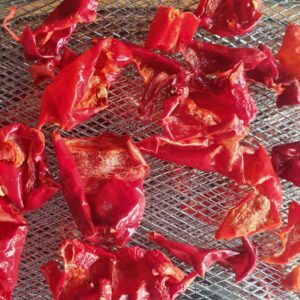
Aleppo peppers (Capsicum annum) are used to make a common Middle Eastern, Turkish and Mediterranean condiment. Typically the peppers are dried, de-seeded and then coarsely ground. Considered a flavour enhancer, like salt or pepper, it provides gentle heat with a touch of fruity sweetness and cumin-like tones. Aleppo pepper is used to season a variety of dishes including beans, salads, dips and meat.
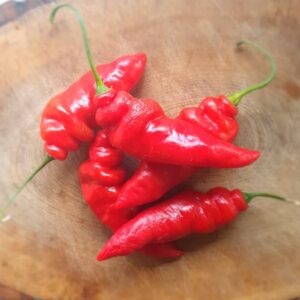
A moderately hot chili (10,000 on the Scoville scale) with pods of a burgundy red colour growing ~8cm in length. Named after the ancient northern Syrian city which is located on the Silk Road. With the ongoing tragedy of war torn Syria, most Aleppo pepper is now produced in Turkey where it also widely grown.
Aleppo pepper plants are grown just like any other C. annum. Mine got to 80cm tall and were quite bushy with a lot of close branching. They would probably benefit from some pruning to improve air flow and access for the sun but I never got around to it.
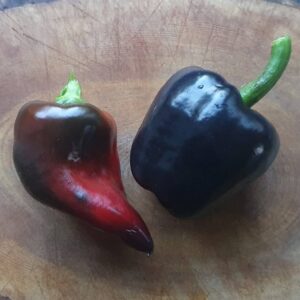
A sweet pepper sourced from Poland, ‘Nokturn’ (Capsicum annuum) has good sized fruits with an amazing plum purple colour. As they ripen a cherry red colour comes through and it is worth waiting until then to harvest them as the flavour will be much sweeter. They have a nice crunch and can be used any way you would use a bell pepper.
The fruits weigh 50-90g and are triangular in shape. Plants can be up to 80cm tall and might need staking. To save pepper seeds allow the fruit to mature until the skin is wrinkly. The seeds will then be ripe enough. Peppers will cross pollinate so take care if you have more than one variety.
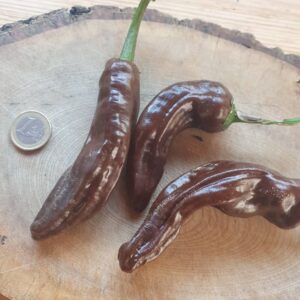
A variety native to Ethiopia and Eritrea. A descendant from chillies that were first brought to east Africa from South America by Portuguese explorers during the 15th century. Plants get to about 1m in height and produce a good amount of 10-15cm fruits. The chillies are medium hot and their relatively large size make them much easier to process than smaller chillies. They ripen from dark green to a chocolatey brown colour and become folded and wrinkled.
It is also known as the ‘Berbere’ pepper as it is commonly used to prepare the east African spice blend of that name. Very versatile chili which can be used for making sauces, cooking fresh, smoking, drying and making a powder from.
Take care when sowing as the capsaicinoid chemicals which give chillies their heat is abundant on the seeds.
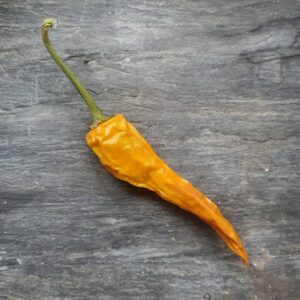
A very productive chili (Capsicum baccatum) from Russia. The fruits are plentiful, thin walled, yellow fleshed, hot and have an amazing citrus aroma. Good for using many ways. With so many I was able to dry them for powder and make a fermented hot sauce. Ripens from green to lemon yellow and the pods are about 10cm long. Plants were about 80cm tall.
Start seeds as early as possible with supplementary heat and light if necessary.
‘Bolivian Rainbow’ chili pepper is a variety which can be grown for both its ornamental value and its small pretty-hot chilies. The fruits are small and conical and ripen through purple, yellow, orange and red as they mature. Plants are an ideal size for growing in pots on a windowsill, conservatory or anywhere that space is limited.
Start seeds as early as possible with supplementary heat and light if necessary.
Yellow version of the well known cayenne pepper. Their thin walls make them ideal for drying but they are also great to use fresh. Plants grow to about 60cm tall and are unfussy. They produce an abundance of fruits. Take care when sowing as the capsaicinoid chemicals which give chillies their heat is abundant on the seeds.
A well known variety, cayenne chillies can be used fresh or dried and crushed into a powder. Plants grow to about 60cm tall and are unfussy. They produce an abundance of fruits. Take care when sowing as the capsaicinoid chemicals which give chillies their heat is abundant on the seeds.
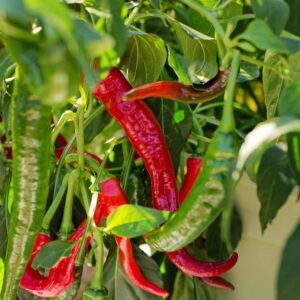
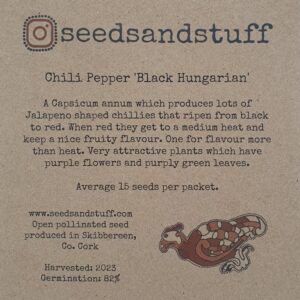
‘Hungarian Black’ chilli peppers (Capsicum annum) produce smallish bushy plants (50cm) which produce lots of Jalapeno shaped fruit. They ripen from black to red. When red they get to a medium heat and keep a nice fruity flavour. One for flavour more than heat, and a good size for when you want to use a whole chilli on a dish for visual effect without taking the face off anyone. Very attractive plants which have purple flowers and purply green leaves.
Average 15 seeds per packet.
Annoyingly, I forgot to take pictures of these but you can see how fancy they can be at the always visually stunning Baker Creek Seed Company catalogue.
‘Aji Largo’ is a Capsicum pubescens chili that originates from Ecuador. Fruits have fleshy walls, ripen to a deep red, and have a nice hot punch (30,000-100,000 on the Scoville scale). The latin name refers to the hairy leaves of this pepper and, along with the black seeds, is what marks them out from the other Capsicum species. This type of chili are also often referred to as ‘Bolivian Hairy’ or ‘Rocoto’ chilies.
Plants have a relatively open growth habit and have a reach of up to a meter. The fruits are about 70mm in length and conical with deep wrinkles. It can be used like any chili – fresh, made into a paste or dried. The flesh is thicker than other chilies and has a higher moisture content.
As Capsicum pubescens grows at higher elevations than other species it is relatively cold tolerant and hardier than other chilis. It still won’t survive frost but it is possible to overwinter them in Ireland if they are brought in and protected for the winter months.
Start seeds as early as possible with supplementary heat and light if necessary. The plants should have as much vegetative growth as possible before flowering and producing chilis. They can be grown in pots but large pots are needed to allow the plants to reach their full potential.
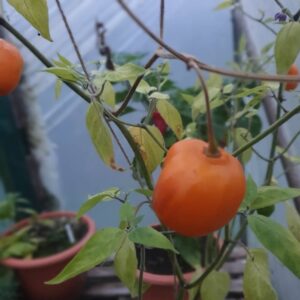
A Capsicum pubescens chili with medium large fairly hot orange coloured fruits. The latin name refers to the hairy leaves of this pepper and, along with the black seeds, is what marks them out from the other Capsicum species. This type of chili are also often referred to as ‘Bolivian Hairy’ or ‘Rocoto’ chilies. This one originates from Guatemala of course and I sourced the seed from a chili enthusiast in La Palma.
It can be used like any chili – fresh, made into a paste or dried. The flesh is thicker than other chilies and has a higher moisture content. They are quite juicy. I prefer to cook them fresh and use other chilies like cayenne for drying.
As Capsicum pubescens grows at higher elevations than other species it is relatively cold tolerant and hardier than other chilis. It still won’t survive frost but it is possible to overwinter them in Ireland if they are brought in and protected for the winter months.
Start seeds as early as possible with supplementary heat and light if necessary. The plants should have as much vegetative growth as possible before flowering and producing chilis. They can be grown in pots but large pots are needed to allow the plants to reach their full potential.
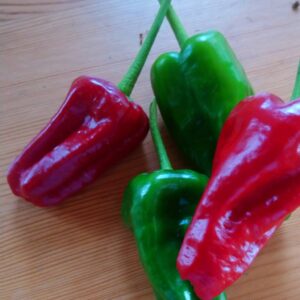
A traditional Spanish variety known as the ‘tapas chilli’ as that’s where they often end up. Padrón (Capsicum annuum) produce lots of medium sized chilis which can be picked young and green or let to ripen to red and hotter. Plants grow to about 70cm tall. They get laden with fruits and quite top heavy so need supporting or they will fall over. Take care when sowing as the capsaicinoid chemicals which give chillies their heat is abundant on the seeds.