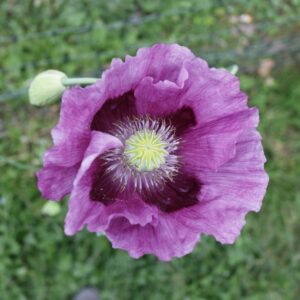
Opium poppies (Papaver somniferum) are an ancient plant grown since Neolithic times. Usable for flower arranging or extracting the seeds for adding to baked goods. Due to their taproots, poppies can be difficult to transplant. I find it easier to broadcast seed in some prepared soil around April. A pink blossomed variety which forms heads of various sizes.
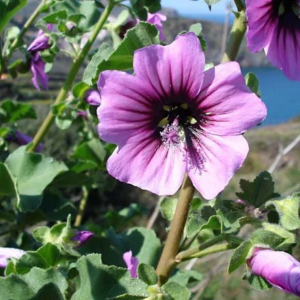
Tree Mallow (Lavatera arborea) is a woody stemmed biennial which has downy fan like leaves and pink dark veined flowers. Fast growing and low maintenance. Enough always self seeds to keep some plants coming through. In flower for a long time – from early summer until around September. It is a native plant to Ireland and usually grows in coastal areas. The seeds for these were saved from my garden which is a few miles inland. It should survive anywhere in Ireland once it doesn’t get a particularly harsh frost below -5°C.
‘Moulin Rouge’ is a very easy to grow and prolific sunflower. It produces striking flowers with burgundy petals that are yellow streaked. The flower centers are chocolate brown and beloved by bees and insects.
A branching variety of sunflower which produce multiple flower heads on strong stems of just above 6 feet (2m) in height. The thinner side shoots produce smaller flowers after the main flower has blossomed which spreads out the flowering period. Does not need staking. Works great in the middle of a flower border.
As well as being one of the best flowers for bees, the ripening sunflower seeds provide plenty of bird food. Goldfinches are particularly drawn to sunflowers. Of course, you can save some and sow your own seed again the following year.
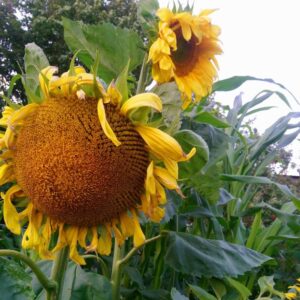
‘Sunspot’ is a dwarf variety of sunflower which produce massive flowers on short strong stems of about 40-50cm in height. They are ideal for windy gardens and small children* – you wont have to hire a cherry picker for them to get a look at the bumblebees collecting pollen. The golden flowers can reach a diameter of 30cm. Good for growing in containers or large pots. The ripening seeds provide plenty of bird food. Of course, you can save some and sow your own seed again the following year.
Average 50 seeds per packet.
*It is not yet clear whether this variety is suitable for small gardens and windy children. Though research abounds, results are conflicting and debates amongst ‘experts’ often degenerate into name calling and slander. Some argue that growing dwarf sunflowers in gardens with ungenerous boundaries only serves to further their diminutive status, whilst elsewhere, a compelling case is made that the joy a child experiences observing bumble bees in the labour of pollen collection is no compensation for having to listen to them drivel on about it afterwards.
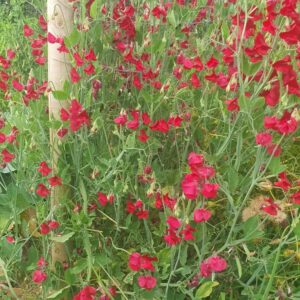
Scarlet is a very prolific pink-red sweet pea. Grows up to 1.8m in height and needs support to make a colourful trellis. Excellent for cut flowers and bouquets.
Sweet peas can be sown in unheated glasshouses or polytunnels in early Spring. Deep cell trays or pots are good as they don’t like too much root disturbance when being transplanted. To get early flowers it is possible to sow in November once mice don’t get the seeds. Their final position should be in fairly fertile soil in a sunny position.
A Russian heirloom cultivar which produces the black oil seeds used in sunflower oil. Much loved by birds. Generally produces one large head with minimal side branching. Grows between 1.5 – 2m tall. The seeds, if not left for the birds, can be collected and also put to good use as a microgreen or green manure.
Calendula officinalis, or pot marigold, is an easy to grow flower with many benefits. Calendula flowers are edible and the petals make a colourful garnish or addition to salads. They are also used for tea either fresh or dried. They have reported healing properties and are commonly used to treat skin conditions and inflammation in the form of a balm. The deeply rich orange and yellow coloured flowers attract insects and may be beneficial in companion planting.
Can flower from June from an early sowing. Sow directly from May or a little earlier in trays for transplanting.
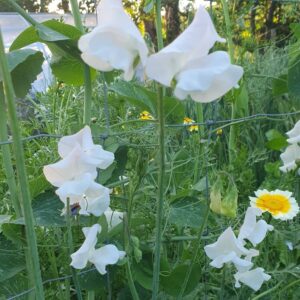
A popular variety with pure white fragrant flowers that bloom over an extended period. Grows up to 1.8m in height and needs support to make a colourful trellis. Perfect for cut flowers and bouquets.
Sweet peas can be sown in unheated glasshouses or polytunnels in early Spring. Deep cell trays or pots are good as they don’t like too much root disturbance when being transplanted. To get early flowers it is possible to sow in November once mice don’t get the seeds. Their final position should be in fairly fertile soil in a sunny position.
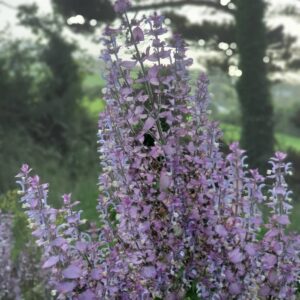
Clary sage (Salvia sclarea) is a biennial flowering plant which is often grown for its essential oil. It is worth growing just to experience the smell of the plants in full bloom. It has been used for perfumes, potpourri, incense, cut flowers, flavouring wines as well as medicinally.
An unfussy plant which will grow in low fertility but will reward you with larger and more prolific plants in decent soil. The plants are very robust and stately, branching out and up strongly without any need of support. Each stem will carry a succession of blossoms which have pale blue and pink parts.
Growing Clary Sage – Sow seeds in early summer and plant out whenever the plant roots have filled their containers. They will put out vegetative growth and establish a root system before dying back for the winter. In the second year, they will come forth with vigour and grow to a height of 100cm. No maintenance required.